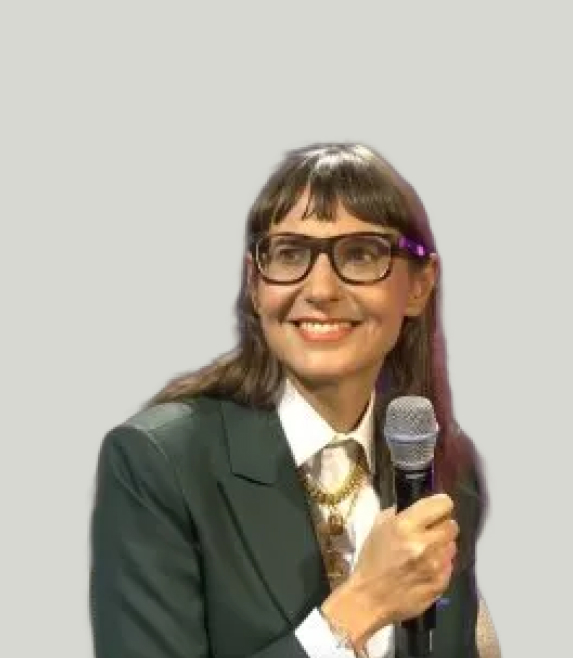
Gentiane Venture
Professor of robotics, the University of Tokyo

Human State-Aware Robotics (H-STAR): From Multimodal Data to Human-Adaptive Behavior in HRI
Thank you to our speakers, researchers, participants, and partners for making H-STAR 2026 a meaningful exchange of ideas and perspectives in human state-aware robotics.
Held alongside IEEE RO-MAN 2026 in Kitakyushu, Japan, H-STAR brought together researchers, speakers, and participants to exchange ideas and explore emerging directions in human-aware robotics and human-robot interaction.
Through invited talks, research presentations, and open discussions, the workshop explored how robotic systems can better understand, adapt to, and interact with people.
Explore how multimodal data can be systematically transformed into adaptive robot behaviors for next-generation Human–Robot Interaction (HRI). We focus on the end-to-end pipeline from clean and generalizable data curation, through learning and modeling, to real-time adaptive behavior—with emphasis on human internal states such as mind wandering, anxiety, engagement, and trust.
The workshop aimed to synthesize best practices, identify open research questions, and foster cross-disciplinary collaborations. It encouraged continued dialogue and follow-up research in human-aware robotics.
Celebrating outstanding research contributions and presentations at H-STAR 2026, held alongside IEEE RO-MAN 2026 in Kitakyushu, Japan.
Congratulations to the Best Presentation Award recipients, and thank you to everyone who contributed to the workshop's success.
Leading experts who shared complementary perspectives at H-STAR 2026.



The published 2026 schedule is preserved here for reference.
Historical information from the completed H-STAR 2026 call for participation. Submissions are closed.
The 2026 call invited work connecting multimodal human data to adaptive robot behavior—methods, datasets, studies, systems, and lessons learned, including robustness, responsible data practices, and deployment in-the-wild.
The 2026 workshop planned to archive accepted submissions on its website.
Presentation visibility: The 2026 workshop included a plan for 1-minute lightning talk videos to be promoted on social media, played during breaks, and linked on the workshop website.
Gaze, speech, motion, physiological signals for HRI.
Engagement, stress, fatigue, mind wandering detection.
Alignment, missing data, dataset bias, robustness.
Supervised, RL, imitation, LLM-based interaction policies.
Real-time learning and human-in-the-loop systems.
Calibration, over-reliance, transparency, human agency.
Biosignals in the wild: privacy, consent, data governance.
Social robots, teleoperation, assistive robots, safety-critical HRI.
De-identification, access control, reproducibility best practices.
An interdisciplinary team spanning HRI, AI, and robotics.





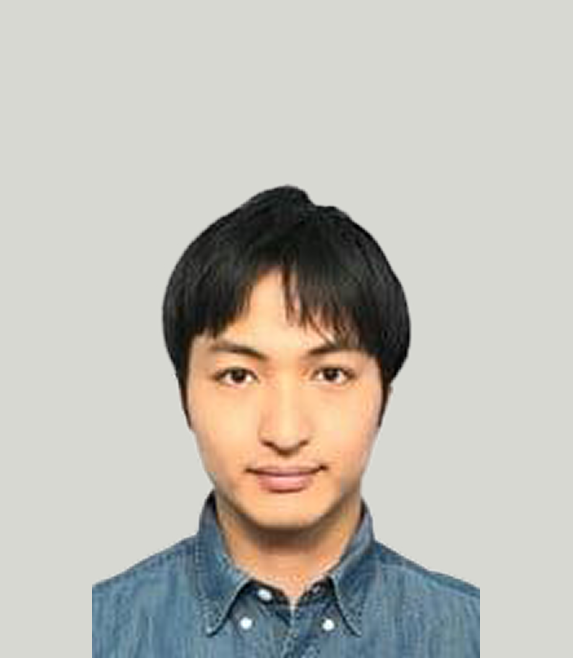


Who the 2026 workshop was designed for.
The workshop was designed for an interdisciplinary audience of researchers and practitioners in Human–Robot Interaction (HRI), robotics, artificial intelligence, and related fields who are interested in transforming multimodal human data into adaptive robot behavior. It is particularly relevant for those working on human state understanding, multimodal sensing and fusion, learning and modeling for interaction, and real-time behavioral adaptation.
The program also addressed researchers concerned with trustworthy and responsible robotics, including issues of human agency, over-reliance, and ethical use of sensitive data, as well as those developing or deploying adaptive robotic systems in domains such as social interaction, teleoperation, and safety-critical applications.
Modeling internal states during interaction.
Combining signals reliably across modalities.
Policies and models grounded in HRI.
Online inference and action selection.
Agency, calibration, transparency.
Robustness for real-world deployment.
Organizations supporting the H-STAR 2026 workshop:






For questions about H-STAR or future workshop updates, reach out to the organizing team.
For inquiries about the workshop, please contact the organizing committee at:
H-STAR 2026 may have concluded, but the ideas, discussions, and collaborations continue. We sincerely thank everyone who contributed to this year's workshop and look forward to bringing the research community together again.
We hope to return next year — details of a future edition will be announced when confirmed.